
Phone : + 91 9172 71 0499
Home > Everything you should know about a Root Canal Treatment
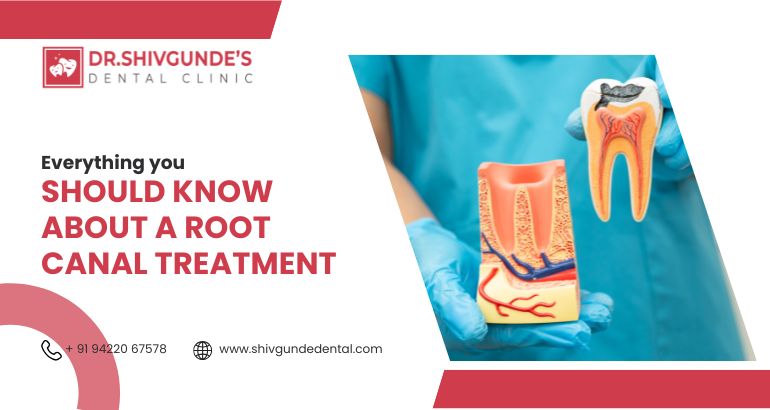
You know what kind of toothache that doesn’t politely knock? Any kind!
It barges in.
It starts as a dull throb while sipping tea. Then it grows into a sharp reminder every time you chew. Nights feel longer. Sleep breaks into tiny pieces. Even your favorite food suddenly feels suspicious.
Most people try everything first. Saltwater rinses. Clove oil. Painkillers. Googling at 2 a.m.
And somewhere between frustration and fatigue, you begin searching for Root Canal Treatment, hoping for something that doesn’t just silence the pain but actually fixes the problem.
Because deep down, you don’t want another temporary patch. You want relief that lasts.
That’s where the real story begins.
Teeth rarely go from healthy to severely painful overnight.
It happens step by step.
First, a small cavity forms.
Then bacteria travel deeper.
Soon, the inner pulp, which holds nerves and blood vessels, gets infected.
Once infection reaches this level, your body sends strong signals. Pain while chewing. Sensitivity to hot or cold. Swelling. Sometimes, even a small bump on the gum.
At this stage, brushing more won’t help. Mouthwash won’t help either.
It’s like trying to mop a floor while water keeps leaking from underneath. Until you fix the source, the problem returns.
That’s when dentists recommend saving the natural tooth rather than removing it.
A Root Canal Treatment focuses on removing infection from inside the tooth while keeping the outer structure intact.
Dentists follow a precise and safe process:
The goal stays simple. Eliminate infection. Preserve your natural tooth. Restore function.
Modern techniques make the procedure far more comfortable than its reputation suggests.
Some people wonder, “Why not just remove the tooth and move on?”
It sounds easier, but the mouth doesn’t work like a row of independent tiles. Every tooth supports the others.
When you lose one tooth:
Keeping your natural tooth maintains balance.
Think of it like a bookshelf. Remove one support in the middle, and the rest start leaning. Everything looks fine at first, but over time, things get messy.
Saving the tooth avoids that domino effect.
At Dr Shivgunde's Dental Clinic, dentists often explain this clearly during consultations. Preserving natural teeth always remains the first priority whenever possible.
Let’s clear up a few myths that still scare people away.
Myth 1: Root canals are extremely painful
Reality: Infection causes pain. Treatment removes it. Modern anesthesia keeps you comfortable.
Myth 2: Extraction is faster and better
Reality: Replacing a missing tooth later often costs more time and money.
Myth 3: Recovery takes weeks
Reality: Most people return to normal activities the next day.
Fear often comes from old stories, not current dentistry.
Dental care has evolved a lot. Today’s procedures focus on comfort and precision.
After treatment, mild tenderness may occur for a few days.
This happens because surrounding tissues need time to calm down.
You might notice:
These sensations usually fade with medication and rest.
Imagine how your muscles feel after a workout. A little sore, but improving each day. Your tooth area behaves similarly.
If pain increases instead of decreasing, you should contact your dentist. Early follow-up prevents complications.
Here’s something many people overlook.
After a root canal, the tooth becomes slightly weaker because the inner pulp no longer nourishes it.
That’s why dentists recommend a crown.
A crown:
Skipping the crown feels like wearing shoes without soles. They look fine, but won’t last long.
At Dr Shivgunde's Dental Clinic, dentists emphasize timely crown placement to ensure lasting results.
This step often makes the biggest difference over the years.
Once healed, your treated tooth doesn’t need special treatment. It just needs consistent care.
Simple habits go a long way:
Consistency beats intensity every time.
You don’t need fancy routines. You just need steady ones.
Think of it like watering plants. A little daily care works better than occasional flooding.
Don’t wait for severe pain.
Visit your dentist if you notice:
Early treatment often means simpler procedures.
Delaying usually means more complex ones.
Your teeth whisper before they scream. Listening early saves trouble.
Modern Root Canal Treatment focuses on comfort and precision. Dentists use local anesthesia to numb the area completely, so you don’t feel pain during the procedure. Most patients compare it to getting a routine filling. The treatment actually removes the infection that causes pain. Afterward, you may feel mild soreness, but it improves quickly with medication.
The duration depends on the tooth and the level of infection. Most treatments take one or two appointments lasting about 60 to 90 minutes each. Complex cases may need additional visits for proper cleaning and sealing. Your dentist ensures thorough care rather than rushing the process. Proper treatment reduces the risk of reinfection.
Yes, a properly treated and restored tooth can last many years or even a lifetime. Good oral hygiene and regular dental visits support long-term success. A crown protects the tooth and prevents fractures. Avoiding very hard foods also helps. With care, the tooth functions just like your natural teeth.
You should consider Root Canal Treatment when the inner pulp becomes infected, but the outer tooth structure remains salvageable. Saving your natural tooth helps maintain proper chewing and alignment. Extraction may create gaps that affect nearby teeth. Dentists usually recommend preservation first whenever possible. Early diagnosis improves outcomes significantly.
Tooth pain rarely appears without a reason. It usually signals something deeper that needs attention.
If you’ve been delaying care or quietly managing discomfort, it might be time to explore Root Canal Treatment with guidance from the team at Dr. Shivgunde's Dental Clinic.
Sometimes the biggest relief doesn’t come from removing a tooth. It comes from saving it and letting your smile stay exactly the way nature intended.
And once that ache disappears for good, you’ll wonder why you waited so long.