
Phone : + 91 9172 71 0499
Home > Do Braces Treatment Hurt? Your Guide to Dealing with Orthodontic Pain
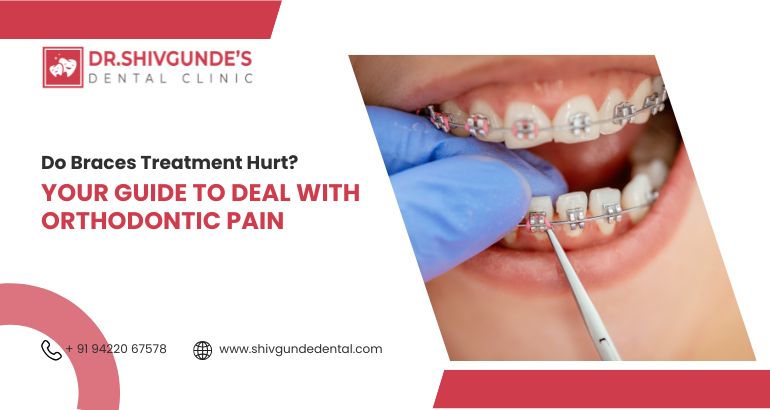
Getting braces does not hurt. However, you may experience discomfort or soreness. These issues are just a dull ache caused by your teeth moving or the pressure exerted on them. It only lasts for a few days in the initial stages and can be easily managed by following simple steps.
At Dr. Shivgunde’s Dental Clinic, Dr Kishore Shivgunde not only provides braces treatment in Solapur, but also believes that honest conversations reduce anxiety far more than reassurance alone. Therefore, he makes them understand just how important aftercare is to manage the discomfort after the treatment.
Before talking about wires, brackets, or aligners, this guide will help to understand what orthodontic pain is and how braces actually work, and why people who have braces describe it as manageable rather than overwhelming.
Braces work by applying gentle, consistent pressure to move teeth into better alignment. That pressure creates a biological response inside the bone and ligaments that hold your teeth in place. This response causes soreness, especially during the early days.
Think of orthodontic discomfort like muscle soreness after restarting exercise. The body notices change, reacts to it, and then adapts. The same principle applies to teeth. The pain signals movement, not damage. Understanding this process often shifts how patients experience those first few days.
Common sensations include:
These sensations usually peak within the first few days and gradually fade as the mouth adapts.
Orthodontic discomfort varies from person to person. Age, pain tolerance, and the complexity of alignment all play a role. Some patients feel pressure without pain, while others experience tenderness that requires simple pain relief.
Dr. Kishor Shivgunde emphasizes that orthodontic treatment should never feel unbearable. If pain interferes with sleep or daily activities, the dentist adjusts the approach. This personalized care defines the best braces treatment in Solapur at Dr. Shivgunde’s Dental Clinic, where comfort and progress move together.
Many people assume braces cause constant pain throughout treatment. In reality, discomfort appears in phases. The most noticeable moments include the initial placement and periodic adjustments.
At Dr. Shivgunde’s Dental Clinic, individuals learn what to expect at each stage. This preparation reduces fear and builds confidence. Pain tends to appear as short-term soreness rather than ongoing discomfort.
Key moments include:
Each phase has solutions that make the experience easier.
Managing orthodontic pain does not require drastic measures. Small, thoughtful steps make a significant difference.
These strategies allow most patients to continue work, school, and social activities without disruption.
Orthodontics has evolved significantly. Today’s systems use lighter forces and more precise planning, such as self-ligating braces and Invisalign. This advancement reduces unnecessary discomfort and shortens adjustment periods.
Orthodontic treatment in Solapur at Dr. Shivgunde’s Dental Clinic has now evolved with the introduction of new braces. Patients benefit from smoother progress and fewer painful surprises. This approach aligns treatment goals with comfort, especially for adults balancing busy schedules.
Pain does not exist only in the mouth. Anxiety often amplifies physical sensations. Patients who worry constantly about pain tend to notice every sensation more intensely.
Dr. Kishor Shivgunde encourages open communication. When patients understand why a sensation occurs and how long it will last, they feel more in control. This emotional reassurance often reduces perceived discomfort more effectively than medication alone.
Some people associate higher comfort with higher expense. While braces cost in Solapur at Dr. Shivgunde’s Dental Clinic vary based on materials and treatment complexity, comfort depends more on expertise than price. Proper planning, gentle adjustments, and patient education matter far more.
Choosing the right orthodontist ensures that cost aligns with value rather than discomfort.
While mild discomfort is normal, certain signs require attention:
These situations need prompt evaluation. Addressing them early prevents unnecessary suffering and keeps treatment on track.
Orthodontic pain does not exist in isolation. It reflects technique, communication, and care quality. At Dr. Shivgunde’s Dental Clinic, the focus stays on patient comfort as much as alignment goals. Dr. Kishor Shivgunde approaches treatment as a partnership rather than a procedure.
Patients who feel informed and supported often report smoother experiences. This trust transforms discomfort into a manageable part of progress.
Many patients focus on the initial discomfort and overlook how quickly it fades. Once the mouth adapts, braces become part of daily life. Eating, speaking, and smiling feel natural again.
The early phase teaches patience, but the later phases reward consistency. This balance defines successful orthodontic journeys.
If hesitation about pain holds you back, remember that orthodontic discomfort rarely defines the experience. Knowledge, preparation, and expert care shape how patients feel throughout treatment.
If you are considering braces and want clarity without fear, consult Dr. Kishor Shivgunde at Dr. Shivgunde’s Dental Clinic for braces treatment in Solapur. Understanding the process transforms uncertainty into confidence and helps you move forward with braces treatment, knowing comfort and care walk alongside progress.
Braces treatment does not cause constant pain throughout the treatment period. Most patients feel mild discomfort during the first few days after placement and following adjustments. This sensation usually fades as the mouth adapts to the changes. Proper guidance and simple care strategies help manage these phases comfortably.
Orthodontic pain typically lasts a few days after adjustments. The pressure gradually decreases as teeth begin to move. Patients often notice improvement within three to five days. Staying consistent with care routines helps shorten this adjustment phase.
Teenagers and adults tolerate braces pain well when guided properly. They may experience slightly longer adjustment periods, but modern orthodontic techniques reduce discomfort significantly. Clear communication and planning improve comfort for patients of all ages.
Soft foods, orthodontic wax, warm saltwater rinses, and approved pain relief help reduce discomfort. Staying hydrated and maintaining oral hygiene also supports healing. Regular follow-ups ensure adjustments remain gentle and effective.