
Phone : + 91 9172 71 0499
Home > Dental Implants for Missing Molars: What Patients Should Know?
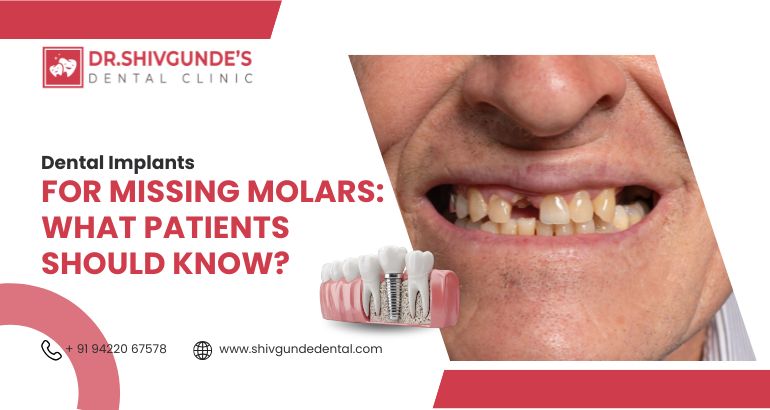
You don’t usually notice your molars until one goes missing.
At first, life feels normal. You chew on the other side. You cut food into smaller bites. You tell yourself it’s manageable. Then small things start changing. Rice gets stuck. Chapati feels harder to chew. Your jaw feels tired after meals. You avoid crunchy snacks you once loved.
Some patients even say, “It’s just a back tooth. No one can see it.”
True. No one sees it. But your mouth definitely feels it.
This is when people start looking for options, conducting their own research, talking to friends, and consulting professionals. At Dr Shivgunde's Dental Clinic, many patients walk in seeking treatment for dental implants with the same story. They ignored the gap for months, sometimes years, until their bite starts feeling… off.
Let’s talk about what really happens when a molar goes missing and what you should know before deciding on your next step.
Molars work like the grinders of your mouth. They crush, mash, and break down food before you swallow. Front teeth slice. Molars do the heavy lifting.
When one disappears, the workload shifts to the remaining teeth. They try to compensate. Over time, that strain shows up as:
Think of it like carrying groceries with one hand all the time. You manage for a while, but eventually your wrist protests.
Your mouth behaves the same way. Balance matters.
Tooth loss doesn’t just create an empty space. Your body reacts.
Here’s what often follows:
Your jawbone needs stimulation from chewing. When a tooth root disappears, the bone in that area slowly reduces. Dentists call this bone resorption.
Neighboring teeth lean into the gap. Your bite loses alignment.
Food and plaque collect more easily in the open space. Cleaning becomes harder.
Your jaw muscles work unevenly, which can lead to discomfort or TMJ strain.
These changes don’t happen overnight. They creep in quietly, like a bookshelf that tilts slightly more each year until books start sliding.
Early action usually prevents these domino effects.
When dentists discuss replacement options, they often mention bridges, removable dentures, and implants. Each has a place. However, many patients prefer implants because they replace both the root and the crown.
That root replacement makes a big difference.
A dental implant sits inside the jawbone and integrates with it. This integration keeps the bone active and stable. You chew normally again without relying on adjacent teeth.
With Dental implants for missing molars, you don’t shave down healthy teeth. The tooth simply feels like it belongs there.
Patients often describe the experience like adding a missing puzzle piece. Everything aligns again without extra effort.
People often imagine a long, complicated process. In reality, dentists follow a clear, step-by-step plan.
Your dentist examines your mouth, takes X-rays or scans, and checks bone strength. This stage ensures safety and precision.
The dentist places a small titanium implant into the bone under local anesthesia. The procedure usually finishes within an hour for one molar.
Your bone bonds with the implant over a few months. This natural fusion creates strong support for chewing.
Your dentist attaches a custom crown that matches your natural teeth in shape and color.
You walk out with a tooth that looks and feels real.
At Dr Shivgunde's Dental Clinic, dentists explain each step clearly so patients never feel surprised or rushed. That transparency often reduces anxiety more than anything else.
Yes, slightly.
Molars handle stronger biting forces. They need:
At Dr. Shivgunde’s Dental Clinic, dentists design molar dental implants in Solapur to withstand daily pressure from chewing tough foods like nuts or chapati edges.
Think of them like sturdy boots compared to dress shoes. Both look good, but one handles heavier work.
That’s why expertise matters during planning and placement.
Most patients worry about pain. The reality surprises them.
During the procedure, local anesthesia keeps you comfortable. Afterward, you may feel mild swelling or soreness for a few days. Dentists usually recommend simple pain relief and soft foods.
You can:
Healing happens gradually inside the bone, not on the surface.
So while your body does the quiet work, your life keeps moving forward.
Cost often shapes decisions. Many patients hesitate because they focus only on the initial expense.
But here’s another way to look at it.
Bridges may need replacement after several years. Dentures may need adjustments and repairs. Implants often last decades with proper care.
So instead of viewing it as a one-time purchase, think of it like investing in something durable that saves repeated fixes.
Dentists at Dr. Shivgunde's Dental Clinic discuss options openly and help patients plan realistically. Clear conversations remove guesswork and stress.
Implants don’t get cavities, but gums still need care.
You should:
Good habits protect the supporting tissues and keep the implant stable long term.
Care stays simple and familiar. Nothing complicated.
Yes, dentists have used dental implants safely for decades with high success rates. Titanium integrates naturally with bone and rarely causes reactions. Dentists carefully evaluate medical history, bone health, and oral hygiene before treatment. This planning minimizes risks and improves outcomes. With proper care, implants function reliably for many years.
Most implants last for decades when patients maintain good oral hygiene and attend regular check-ups. The titanium post often remains stable for life, while the crown may need replacement after many years of wear. Dentists design molar implants to handle strong chewing forces. Consistent care protects the surrounding gums and bone. Longevity depends largely on daily habits.
Dentists use local anesthesia during placement, so patients feel little to no pain during the procedure. Mild soreness or swelling may occur afterward, but it usually settles within a few days. Simple medications and soft foods help manage recovery easily. Many patients compare the discomfort to a routine extraction. Most return to normal activities quickly.
Treatment usually spans several months because healing between stages matters. The implant needs time to bond securely with the jawbone before the crown placement. Some steps take only one visit, while others require patience. Dentists customize the timeline based on individual healing and bone quality. A consultation gives the most accurate estimate.
A missing molar may indicate an issue with simple symptoms such as slower chewing and mild jaw strain.
Over time, these issues become persistent and more severe.
If you’ve started considering dental implants, you already sense that your mouth deserves better balance. A simple conversation at Dr. Shivgunde's Dental Clinic can help you explore your options, understand your bone health, and decide whether Dental implants fit your needs.
Sometimes the smartest step isn’t dramatic. It’s simply choosing not to live with a gap any longer.