
Phone : + 91 9172 71 0499
Home > Can You Switch From Braces to Invisalign Mid-Treatment?
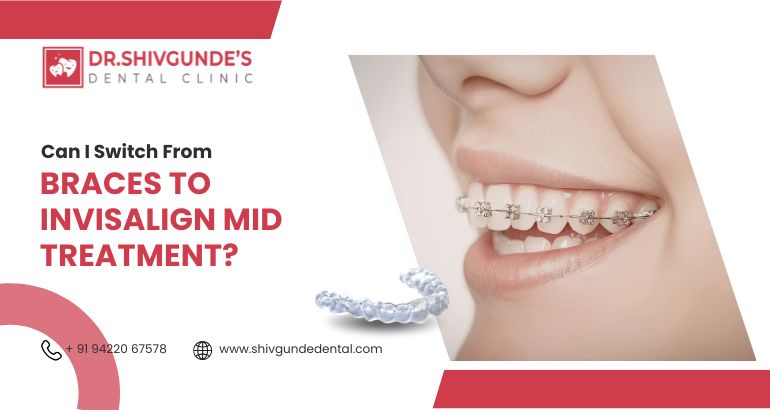
Orthodontic treatment often begins with excitement. A patient looks at the mirror, imagines a future with straight teeth, and commits to braces with determination. The first few months usually feel manageable. Adjustments happen, small changes appear, and the smile slowly begins its journey toward alignment.
Then, daily life steps in.
A formal presentation at work arrives. Wedding invitations start appearing. Someone notices how food occasionally clings to brackets during lunch meetings. Cleaning around wires begins to feel like navigating a maze with a toothbrush. At some point during this journey, many patients pause and wonder whether there might be another path forward.
That curiosity often leads to one particular question: Can treatment continue with clear aligners instead?
Patients who explore switching from braces to Invisalign options usually do not search for shortcuts. They simply look for a method that fits better into their lifestyle while continuing the progress they have already made. Clinics like Dr. Shivgunde's Dental Clinic often meet patients at this exact crossroads, when treatment already moves forward, but comfort and convenience start becoming important factors in the decision.
Orthodontics rarely follows a straight line. Much like adjusting a recipe midway through cooking, sometimes small changes in the process can still lead to a satisfying final result.
Most orthodontic treatments begin with traditional braces because they provide strong control over tooth movement. Brackets and wires guide teeth into precise positions, especially when alignment issues feel complex.
However, as treatment progresses, patients sometimes discover practical challenges.
Common reasons include:
None of these reasons suggests that braces fail. They simply reflect how real life interacts with long-term orthodontic care.
Imagine wearing a watch with a leather strap every day. It functions perfectly, yet over time, you might prefer a lighter strap that still tells the same time. Orthodontic treatment sometimes follows a similar pattern.
Orthodontic treatment works like a carefully planned map. Each tooth moves according to a sequence designed by the dentist. When braces begin this process, they start guiding teeth toward specific positions.
In some cases, dentists may continue the remaining stages with clear aligners.
However, several factors influence this decision:
An experienced dentist evaluates these factors carefully before recommending any change in the treatment approach. At Dr. Shivgunde's Dental Clinic, dentists usually assess detailed scans, treatment history, and alignment progress before suggesting whether aligners can continue the process.
Orthodontic care resembles assembling a puzzle. Once several pieces fall into place, a dentist may choose a different tool to finish the remaining sections.
Understanding the difference between braces and aligners helps patients appreciate why switching sometimes becomes possible.
Traditional Braces
Braces rely on brackets, wires, and controlled pressure. They remain fixed on teeth throughout the treatment period. Dentists adjust wires periodically to guide teeth into proper alignment.
Clear Aligners
Clear aligners work through a series of removable trays. Each tray applies gentle pressure and gradually shifts teeth into new positions.
Key differences include:
Think of braces like a steady train moving along a fixed track. Aligners function more like stepping stones across a stream. Both paths can lead to the same destination, but each requires different conditions for the journey.
Dentists do not recommend a Braces to Invisalign conversion in every situation. Certain conditions make the transition more practical.
For example, switching may work better when:
Patients must usually wear aligners for 20 to 22 hours each day. Without that commitment, treatment progress may slow down.
Dentists also take fresh scans or impressions to create new aligner trays that continue the orthodontic plan.
Some patients eventually transition to Invisalign after braces to complete the final stages of treatment.
Clear aligners often provide certain lifestyle advantages:
Patients still follow a structured treatment plan. Aligners must change every one to two weeks, depending on the orthodontist's instructions.
However, discipline becomes extremely important. Aligners only work when patients wear them consistently.
Orthodontists often describe aligners as quiet partners in treatment. They work discreetly in the background as long as patients allow them enough time to perform their job.
Before recommending a switch, dentists perform a detailed evaluation.
At Dr Shivgunde's Dental Clinic, orthodontists typically examine:
Dentists must ensure that aligners can safely handle the remaining orthodontic goals.
Sometimes braces still offer the best control for specific movements. In such cases, dentists may advise completing treatment with braces to achieve the most stable outcome.
Regardless of the method, patient habits play a huge role in treatment success.
Helpful practices include:
Orthodontic care resembles tending to a garden. The dentist plants and guides the growth, but daily care keeps the plants healthy.
Yes, in certain cases, patients may switch from braces to Invisalign during the later stages of treatment. Dentists evaluate the current tooth position, bite alignment, and treatment goals before making this decision. Aligners work best when major corrections have already occurred, and only minor adjustments remain. Patients must also commit to wearing aligners for the recommended hours every day. A professional orthodontic evaluation determines whether this transition fits the treatment plan safely.
Switching treatment does not always delay progress, but the dentist must carefully redesign the remaining plan. Orthodontists usually take fresh digital scans to create new aligners that continue the alignment sequence. Some adjustments may require additional trays, which could slightly extend treatment duration. However, many patients still complete treatment within a similar timeframe. Consistent aligner wear helps maintain steady progress.
Clear aligners can achieve excellent results when dentists plan treatment correctly, and patients follow instructions closely. Aligners work particularly well for mild to moderate alignment corrections. Braces still provide stronger control for complex movements such as severe rotations or bite corrections. Dentists sometimes combine both methods during a single treatment plan. The choice always depends on the patient’s unique orthodontic needs.
Orthodontic treatment rarely follows a perfectly predictable journey. Life evolves, priorities shift, and patients sometimes reconsider the path they initially chose.
Options like a switch from braces to Invisalign provide flexibility for patients who seek comfort without abandoning their progress. Dentists evaluate each situation carefully before recommending such changes.
Clinics like Dr. Shivgunde's Dental Clinic often guide patients through these decisions with careful assessments and customized treatment planning.
Sometimes the road to a confident smile simply changes direction slightly.
And occasionally, that small shift in approach can make the entire journey feel far more comfortable.